The Problem
Think about the last time you ran out of something at home. Maybe it was onions at 8 PM. Or milk on a Sunday morning. You either went out yourself, or you ordered online and waited two days.
In India, this was the reality for most people. Online grocery delivery existed, but it was slow. Nobody had figured out how to make it truly instant.
The gap was clear:
Millions of people needed groceries fast, but no platform could deliver in under an hour — let alone 10 minutes. That gap is exactly what Zepto was built to fix.
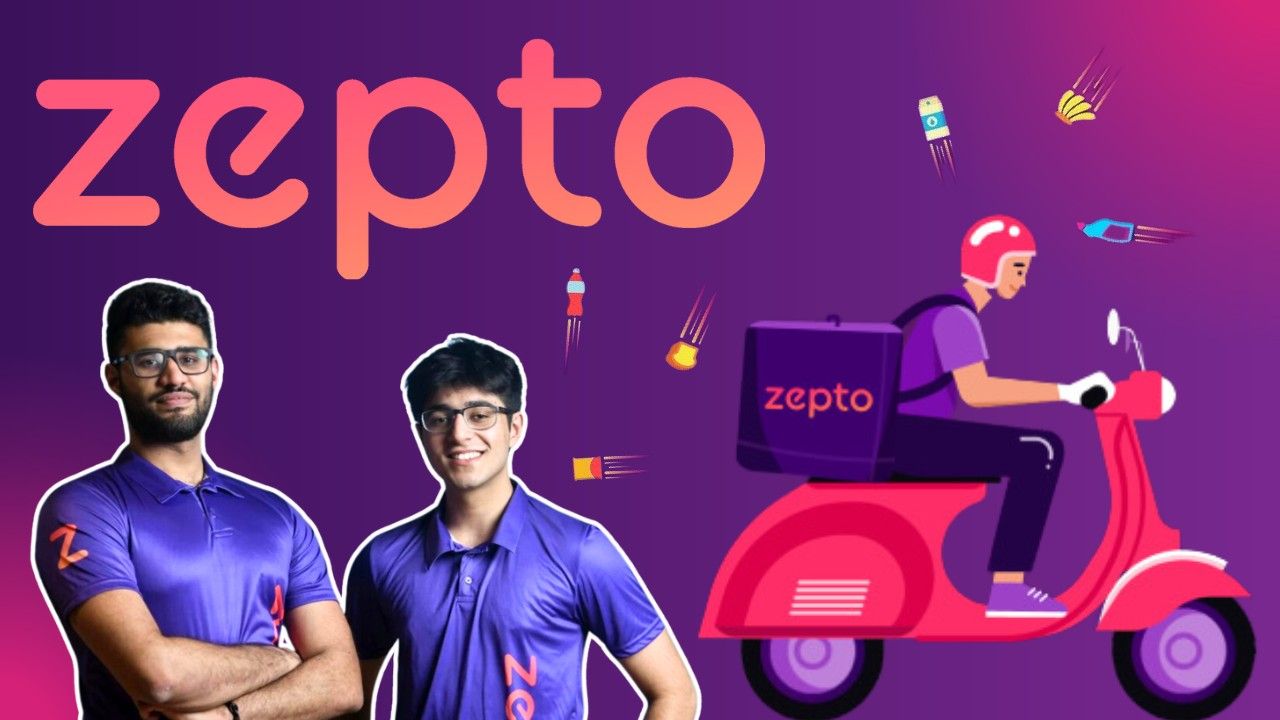
Two Kids Who Could Not Stop Building Things
Aadit Palicha grew up in Mumbai, moved to Dubai for school, and graduated as the top student in his batch. He scored a perfect 45 in his IB exams. By 17, he had already launched his first product — a student carpool app called GoPool in Dubai. It did not work. He moved on.
Kaivalya Vohra, his childhood friend, was just as sharp. The two had been building things together since school, holding each other accountable, splitting work by what each was good at.
Both got into Stanford to study Computer Science. That is the kind of achievement most Indian parents frame and hang on the wall.
They left anyway.
The First Failure Nobody Talks About
Before Zepto, there was KiranaKart.
In 2020, when Aadit and Kaivalya were just 17, they started KiranaKart. The idea was to partner with local kirana stores and help them deliver groceries in about 45 minutes. They raised $730,000 in early funding — which is a lot of money for two teenagers.
But something was off. Customers were not sticking around. The product was not clicking the way they had hoped. After about 10 months, they shut it down.
Most people would have gone back to Stanford at this point.
These two went deeper into the problem instead. This is what separates builders from dreamers.
The Pandemic Changed Everything
When COVID-19 hit, everyone was stuck at home. Grocery delivery apps were overwhelmed. Orders were delayed by days. Store shelves were unpredictable.
Aadit and Kaivalya, living as bachelors, felt this pain every single day. They kept asking themselves one question: what if groceries could show up in 10 minutes?
On paper, it sounded ridiculous. Nobody had done it at scale. Even seasoned investors thought it was impossible.
But the two of them had spotted something important. The reason delivery was slow was not because riders were slow. It was because the warehouse was too far away from the customer. If you placed tiny warehouses inside neighbourhoods, the distance shrinks. The time shrinks. 10 minutes becomes possible.
The Dark Store Model
Small, hidden micro-warehouses stocked with the most commonly ordered items, placed right inside the areas where people live. This was the breakthrough insight that made 10-minute delivery possible.
The WhatsApp Group That Started It All
They did not build an app first. They started with a WhatsApp group.
Aadit and Kaivalya started taking grocery orders from neighbours manually. They delivered themselves. They watched what people ordered, how often, and what they complained about.
Only after they saw it working in a tiny, messy, unscalable way did they decide to build the real product.
A lesson most founders skip:
They build the app before they understand if anyone actually wants it. Zepto proved the demand first — with zero technology.
Every Investor Said No
When they started pitching the idea, they were 19. They were pitching 10-minute delivery in a country where 2-day delivery was considered fast. And they had one failed startup behind them.
The response was predictable.
“You are completely out of your mind, this will never work.”— Almost every early investor conversation
But they kept going. They got into Y Combinator, one of the most respected startup programs in the world. They used the network and credibility to start raising real money.
The fundraising timeline
Raised $60 million at a $225 million valuation
45 days later — raised $100 million at $570 million valuation
The valuation more than doubled in 45 days.
The Machine Behind 10 Minutes
Here is how Zepto actually works.
Each dark store covers a small radius, usually just a few kilometres. It stocks around 2,500 to 5,000 items that are ordered most frequently in that area. When you place an order, the nearest dark store picks, packs, and hands it to a rider. The rider is already nearby. 10 minutes later, it is at your door.
The key was technology. Zepto built systems to decide where to open stores, which products to stock in each one, and how to route deliveries efficiently. None of this is simple. Most of it is invisible to the customer.
By the time they raised their Series C, they had 100 dark stores running and were processing hundreds of thousands of orders per day.
Growing Up in Public
Being 19 and running a company with hundreds of employees is not easy.
Investors did not always take them seriously at first. In meetings with senior executives and government officials, they had to fight to be heard. Aadit has spoken about how their age was constantly questioned.
Their answer was always the same: let the numbers speak.
Within 9 months of launch, Zepto was valued at $900 million. By 2024, it crossed $5 billion. Aadit became one of the youngest billionaires in India.
Kaivalya, who handles the technology side, quietly built one of the most operationally complex systems in Indian e-commerce. His focus on holding themselves accountable — a habit they built together since school — became one of Zepto's core cultural traits.
The Competition Was Already There
Zepto did not enter an empty market. Blinkit (formerly Grofers), Swiggy Instamart, and BigBasket were already operating. These were well-funded, well-known companies with years of head start.
What Zepto had was obsession with one thing: speed.
While others were building broad platforms, Zepto went extremely deep on the 10-minute promise. Every operational decision, every technology investment, every dark store location was filtered through one question: does this make us faster?
That single-minded focus helped them carve out a real position in a crowded market. In a world of generalists, the obsessed specialist wins.
What You Can Take Away From This
Start before you are ready.
Zepto started as a WhatsApp group. No app, no funding, no team. Just two people manually testing if the idea made sense.
Failure is data, not a dead end.
KiranaKart failed. They did not quit the space. They figured out what was wrong (the model, not the market) and rebuilt smarter.
Pick one thing and go all in.
In a market full of competitors, Zepto won attention by being the best at exactly one thing: 10 minutes. They did not try to be everything.
Conviction over consensus.
Every investor said the idea was crazy. They went and proved it anyway. Conviction in your own data matters more than external validation.
Complement each other.
Aadit runs the business side. Kaivalya runs the technology. They have never tried to do each other's job. A strong co-founder relationship built on trust and complementary skills is a competitive advantage.
The Numbers
| Milestone | Detail |
|---|---|
| Founded | April 2021 |
| First dark stores | 100 stores in 5 months |
| Series C valuation | $570 million (December 2021) |
| Valuation at 9 months | $900 million |
| Valuation in 2024 | $5 billion |
| Total funding raised | Over $1.95 billion |
| Cities operating | 10+ metros across India |
| Dark stores | 250+ as of 2024 |
Zepto is still growing. An IPO is on the horizon. Two kids who could not get investors to take them seriously are now competing with Amazon. Not bad for a WhatsApp group.